
Mechanical skill will only take you so far. In today’s high-stakes arenas, the real difference-maker is competitive gaming psychology—the ability to stay calm, focused, and decisive under pressure. Many talented players plateau not because their aim is lacking, but because tilt, anxiety, and burnout sabotage their performance when it matters most. This guide dives into the mental side of esports, translating proven principles from sports psychology and cognitive science into practical, game-ready strategies. You’ll learn how to sharpen focus, regulate emotions, and make smarter in-game decisions—so your mindset becomes your greatest competitive advantage and your rank finally reflects your true skill.
Building your mental foundation goes beyond raw mechanics.
Start with an anecdote about choking a 1v1 clutch: I remember losing a finals match because my hands shook after the first round. My aim was fine, but my working memory overloaded, and I forgot basic callouts.
That moment taught me the cognitive link to gameplay. Working memory—your brain’s ability to hold and manipulate information—fuels APM (actions per minute) and decision speed. Pattern recognition, the skill of spotting familiar scenarios, sharpens accuracy and game sense. According to research on expertise development, elite performers rely on chunking patterns to reduce cognitive load (Ericsson, 2006).
However, some players argue mechanics alone win games. I used to believe that too. Yet when I started tracking distractions and tilt, my stats improved more than grinding aim drills.
Try a self-assessment framework: Do you tilt after an early loss? Drift mid-game? Freeze in clutches? Name the pattern. That’s competitive gaming psychology in action.
Then shift to process-oriented goals. Instead of “win tonight,” commit to “maintain calm communication” or “check the mini-map every five seconds” for ten minutes. Pro tip: track one mental metric per session.
Over time, small upgrades stack like leveling up in Dark Souls.
Mastering Focus and Concentration in High-Stakes Matches
You know the feeling. You queue up for a high-stakes match, adrenaline spikes—and suddenly your brain decides now is the perfect time to remember that embarrassing misplay from last week. Frustrating, right? Let’s fix that.
Triggering the “Flow State”
The flow state is a mental zone where action feels automatic and time seems to blur (think Neo seeing the Matrix code). To enter it consistently, build a simple pre-game ritual:
- Specific music – One repeatable track signals “it’s go time” to your brain.
- Light stretching – Loosen shoulders, wrists, and neck to reduce physical tension.
- Objective review – Write or say three clear goals for the match.
This routine reduces cognitive load—mental effort used for decision-making—so more focus goes to gameplay. Research shows pre-performance routines improve consistency under pressure (Cotterill, 2010).
Pro tip: Keep the ritual under 10 minutes. Long routines become another distraction.
Combating Internal and External Distractions
External noise tilts anyone. Use noise-canceling headphones and declutter your desk. A clean setup equals fewer visual interruptions (yes, that snack wrapper counts).
Internal distractions are worse. Create a short mantra like, “Next play, best play.” If negative self-talk creeps in, use a thought-stopping technique: mentally say “stop,” then replace the thought with your mantra. This aligns with principles from competitive gaming psychology.
Protect your focus like it’s your final life bar.
The Mid-Game Mental Reset
After a tough round, try the 4-7-8 method: inhale 4 seconds, hold 7, exhale 8. It activates the parasympathetic nervous system, lowering heart rate (Jerath et al., 2015). Three cycles. That’s it.
Because losing composure over one mistake? That’s how matches snowball—and we’ve all been there.
The Anti-Tilt Protocol: How to Regulate Game-Changing Emotions
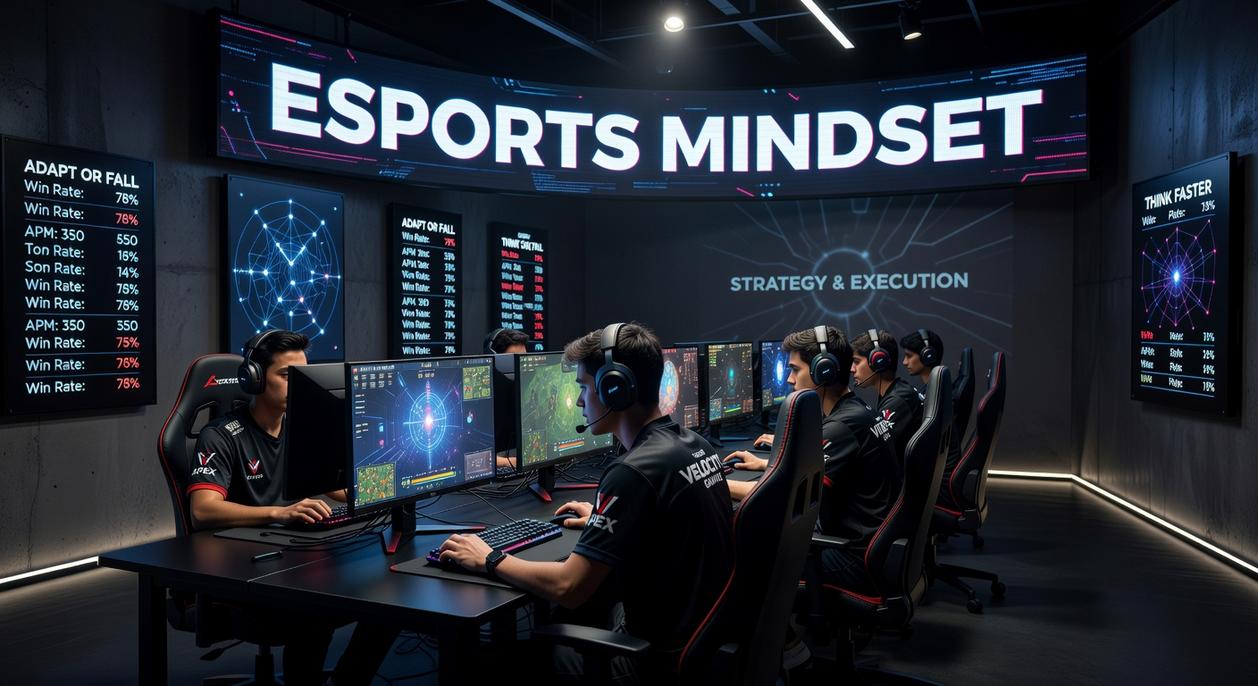
Tilt isn’t just “being mad.” It’s a physiological stress response: elevated cortisol, faster heart rate, narrowed focus. In competitive gaming psychology, this is the moment your brain shifts from strategic thinking to emotional reaction. I learned this the hard way after throwing a ranked match because of one missed skill shot. One mistake became three. Three became a loss streak. (Sound familiar?)
Understanding the Tilt Cycle
Tilt starts with a trigger—an error, trash talk, lag. The brain interprets it as threat. You rush plays, ignore cooldowns, stop communicating. Each mistake reinforces the narrative that “everything is going wrong.” The cascade is real; studies on stress show cognitive flexibility drops under pressure (American Psychological Association).
Proactive Resilience Building
I used to grind on four hours of sleep and call it dedication. It wasn’t. Sleep deprivation reduces emotional regulation (CDC). Balanced meals and exercise raise frustration thresholds. Pro tip: track sleep like you track stats. Small habits off the PC prevent meltdowns on it.
In-the-Moment Tilt Breakers
- Ask: What can I learn? not “Why me?”
- Mute toxic teammates immediately.
- Follow the five-minute step-away rule.
Even subtle factors—like those explored in how sound design influences player performance—shape emotional control. The lesson? Control the inputs, or they control you.
Accelerating Decision-Making and In-Game Intelligence
First, sharpen your VOD review with intent. Don’t just pause when you miss a shot. Instead, ask: Why did I rotate here? What information did I miss? Decision-making errors are often invisible in real time (especially when adrenaline kicks in). For example, rotating off a bomb site after one audio cue might feel smart—but was the cue confirmed on the mini-map? According to cognitive load research (Sweller, 1988), overloaded brains default to shortcuts. Reviewing helps you spot those shortcuts.
Next, practice scenario visualization. Mentally rehearse retakes or late-game team fights. Athletes use this method to strengthen neural pathways (Guillot & Collet, 2008), and it applies directly to competitive gaming psychology. The more vividly you imagine positioning and cooldown timing, the faster your in-game reactions become.
Finally, train information filtering. Prioritize mini-map pings, kill feed updates, and cooldowns. Tune out cosmetic effects and crowd noise (yes, even the flashy skins). Pro tip: limit comms to essential callouts during high-pressure rounds.
Your New Mental Playbook for Competitive Dominance
You came here looking for an edge—and now you have one. With these proven tools rooted in competitive gaming psychology, you’re equipped to train like the pros and think beyond raw mechanics. Because the real ceiling isn’t your aim or APM—it’s your mindset under pressure.
Mechanical skill will plateau. Mental mastery won’t. When you build resilience, sharpen focus, and reset with intention, you turn high-stakes moments into opportunities instead of choke points.
Now take action: pick one strategy—like the mid-game reset—and use it in your next three sessions. If you’re serious about climbing, commit to training your mind like you train your mechanics. Your rank depends on it.