Gaming is evolving faster than ever, and players aren’t just looking for entertainment—they’re searching for mastery. Whether you want to understand advanced core mechanics, optimize your level-up progression, or dive deeper into immersive worlds packed with strategic depth, this article is built to guide you there. We break down the hottest topics shaping modern games, from finely tuned combat systems to the rising influence of bio-engineered creature design in creating dynamic, reactive ecosystems.
Many players struggle to move beyond surface-level play, missing the hidden systems that separate casual runs from high-level performance. Here, we focus on the mechanics that truly matter—how they work, why they’re designed that way, and how you can use them to your advantage.
Our insights are grounded in extensive gameplay analysis, system breakdowns, and ongoing research into emerging design trends. If you’re ready to think deeper, play smarter, and explore richer worlds, you’re in the right place.
The Art and Science of Digital Life
Creating digital creatures sounds easy—until you compare Concept Art A vs. World-Ready Creature B. The first looks stunning in a sketchbook; the second behaves, adapts, and feels native to its environment. That gap is the real challenge. On one hand, you have aesthetics: dramatic silhouettes, glowing eyes, exaggerated limbs. On the other, you need systems—movement logic, ecological roles, progression hooks. Without both, immersion breaks (and players notice fast).
So how do you bridge it? Start with purpose, then physiology, and finally mechanics. This structured approach to bio-engineered creature design turns abstract inspiration into functional, memorable life.
Laying the Genetic Foundation: Core Principles
Early in my design career, I made a creature that looked incredible—glowing veins, obsidian claws, cinematic roar. Players hated it. Why? It made no ecological sense. It existed purely for spectacle. That failure taught me the Bio-Engineering Mindset: think in terms of function, environment, and evolutionary pressure—not just aesthetics (because cool means nothing if it breaks immersion).
At the heart of believable bio-engineered creature design are three pillars: Plausibility, Purpose, and Progression.
Plausibility means grounding fantasy in biology. Even dragons need respiratory logic. Real animals evolve traits due to environmental pressures (Darwin’s natural selection theory supports this). If your creature flies, where does the lift come from? Hollow bones like birds? Massive caloric intake? Ignore metabolism and players WILL notice.
Purpose defines its ecosystem role. Is it predator, prey, companion, or obstacle? I once designed a “boss” creature that had no territorial behavior. Players simply kited it endlessly. Lesson learned: behavior must align with ecological function.
Progression Is Evolution in Motion
Progression ensures the creature scales with difficulty. Variants, elites, adaptive resistances—these simulate evolutionary arms races. Think Pokémon evolutions (a pop culture masterclass in scaling mechanics). Pro tip: design the base form LAST so upgrades feel intentional, not patched on.
Step 1: Defining the Ecological Niche

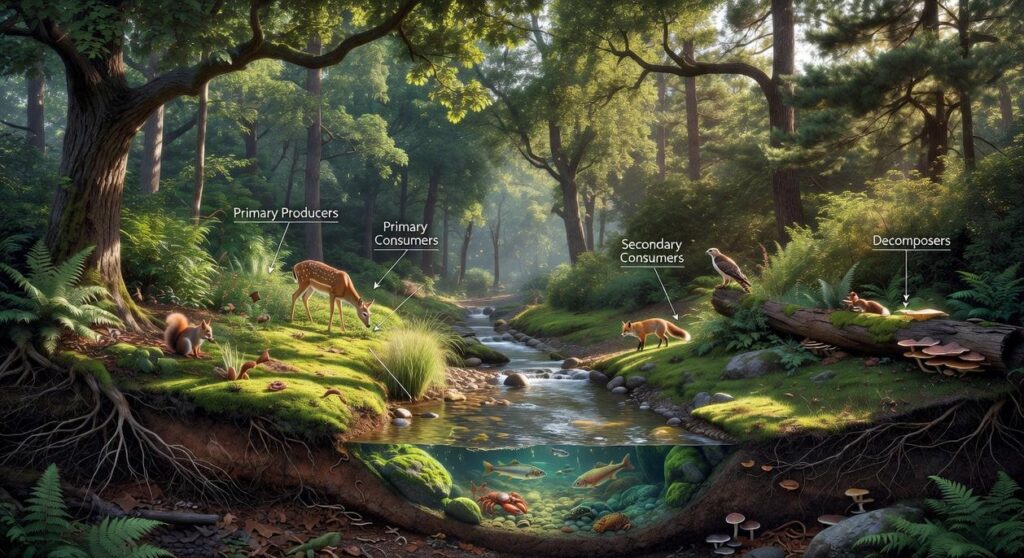
Before designing claws, wings, or laser glands, start with the ecological niche—the specific role an organism plays in its environment. In simple terms, it’s the creature’s job description. Where does it live? What does it eat? What eats it? Answering these questions prevents random design choices (because glowing antlers are cool, but why would evolution bother?).
Environment is the primary driver of form and function. A toxic swamp rich in acidic water may favor corrosion-resistant hide and filter-like lungs. A zero-gravity asteroid field demands grasping limbs or gas-jet propulsion for movement. In a crystalline forest that refracts light, prismatic camouflage could mean survival.
Next, define trophic level—an organism’s position in the food chain. Herbivores consume plants. Carnivores eat other animals. A radiotroph, by contrast, feeds on radiation, similar to certain fungi observed near Chernobyl (Dadachova et al., PLoS ONE, 2007). That dietary choice shapes metabolism, behavior, and territory size.
Predator-prey dynamics refine the blueprint further. If it hunts armored beetles, it may evolve crushing jaws. If shadow-stalkers hunt it, natural armor or venom becomes essential.
For deeper mechanics, explore the science behind genetically modified monsters.
This foundational clarity transforms bio-engineered creature design from guesswork into believable evolution.
Step 2: Engineering Anatomy and Abilities
When I designed my first swamp-stalker for a prototype, I gave it massive wings. It looked incredible, but it kept clipping through trees and breaking encounters. That failure taught me a core rule: anatomy must serve function.
Start with the skeletal and muscular structure. A burrower needs reinforced forelimbs and a flexible spine; a flier demands hollow bones and explosive chest muscles. Movement defines combat role:
- Gliders dominate vertical arenas with hit-and-run tactics.
- Amphibious brutes control choke points between land and water.
Next, craft sensory organs. Perception is gameplay. Infrared vision enables night ambushes; heightened chemoreceptors allow tracking wounded players across zones. I once tested a predator that detected heartbeat vibrations—suddenly stealth meant controlling your sprint, not just hiding behind crates. Players panicked, and it was glorious.
Now add the hook. This is where bio-engineered creature design shines. Consider:
- Bioluminescence to lure prey or signal allies in raid mechanics.
- Acidic projectiles creating lingering area-of-effect hazards.
- Metamorphic shifts that swap armor for speed mid-fight.
- Symbiotic fauna that buff defenses like a living support class.
Some designers argue spectacle should come first. I disagree. Flash without ecological logic feels hollow (and players notice). Anchor every limb, sense, and mutation to the creature’s niche, and you’ll build encounters that feel inevitable, not scripted. Pro tip: prototype movement first, because if it moves well, everything else evolves naturally. Balance spectacle with systems, and your creature becomes legend rather than clutter. In playtests, restraint often beats excess. Every time.
Step 3: Weaving Your Creature into the World
A creature feels real when it affects gameplay systems, not just scenery. START WITH BEHAVIOR. Map its biology to AI triggers. If it has weak eyesight but strong hearing, script it to investigate sound cues first. If it’s territorial, define patrol radiuses players can learn and exploit. Think of Monster Hunter: predictable patterns reward preparation (and patience).
Next, tie it into progression loops. Ask: what does the player GAIN? Chitin plates for mid-tier armor, venom sacs for stealth poisons, or bioluminescent glands for night-vision potions. Make each drop purposeful. Pro tip: limit rare materials to specific conditions—like harvesting only during migration—to encourage exploration.
- Connect drops directly to crafting tiers.
Finally, embed narrative weight. Is the creature sacred, farmed, or feared? Villagers might build shrines, hunters might track seasons, scholars might debate its origins in bio-engineered creature design. When cultures react, the ecosystem feels ALIVE—and players feel involved, not just entertained.
Great ideas fade when they lack structure. You imagine a terrifying swamp predator, but it feels flat, disconnected, unfinished. The fix is simple and practical. Start with the NICHE: what extreme pressure shapes survival? Toxic air, crushing gravity, endless darkness. Next, engineer the anatomy so every limb, organ, and instinct answers that pressure. Finally, integrate it into the world’s food chains, factions, and progression loops.
Use this bio-engineered creature design framework whenever you’re stuck:
- Define the pressure
- Adapt the body
- Embed the purpose
Begin today with one brutal condition and build PERFECT adaptation. Make it feel alive.
Level Up Your Strategy and Dominate the Game
You came here to sharpen your understanding of advanced gaming mechanics, immersive world-building, and the evolving strategies behind competitive progression. Now you have a clearer roadmap to mastering core systems, optimizing level-up paths, and leveraging bio-engineered creature design to gain a tactical edge.
The real frustration isn’t losing a match—it’s feeling stuck, underpowered, or one step behind players who understand the mechanics better than you. Falling behind in progression, mismanaging builds, or overlooking creature synergies can stall your momentum and drain the fun from the experience.
The solution is simple: apply what you’ve learned. Analyze core mechanics before committing to a build. Experiment with creature combinations that complement your playstyle. Refine your progression strategy so every level gained moves you closer to dominance—not just incremental improvement.
If you’re ready to stop guessing and start winning, dive deeper into advanced guides, strategy breakdowns, and creature optimization insights trusted by thousands of competitive players. Don’t let inefficient tactics hold you back—level up smarter, refine your strategy today, and take control of your next game session.