
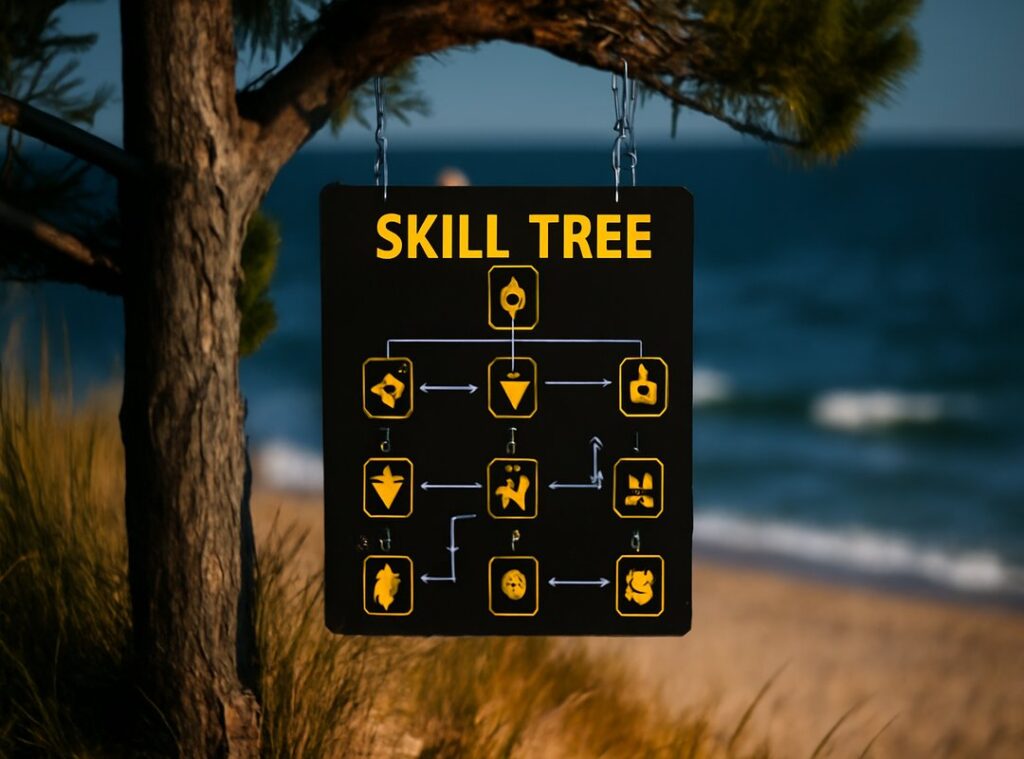
Remember that feeling? That first skill point in an RPG, and you’re stuck deciding. Fireball spell or stronger sword swing?
It’s a dilemma we all know. But what’s so compelling about these choices? It’s the skill trees gameplay benefits that draw us in.
I’ve spent years dissecting why some games rise above others, and the skill tree is a key player. It’s not just about power-ups. It’s about the psychology of choice and the satisfaction it brings.
This article will walk you through why we love character customization. We’ll break down the hidden advantages of skill tree mechanics. You’ll get takeaways that go beyond the obvious.
So whether you’re a player or an aspiring designer, you’re in the right place to discover what makes a progression system truly work.
More Than Just a Menu: Skill Trees Unlocked
What the heck is a skill tree? It’s more than just a list. It’s a visual representation of your character’s potential, abilities waiting to be unlocked.
Like a map of your efforts and decisions. You spend points, you open up skills. It’s a contract, really.
Think of Diablo II or World of Warcraft. You’ve got branching paths, right? Choices that lead to capstone abilities.
You give time and plan, the game gives power.
Not just a boring list of upgrades. You need prerequisites and interconnections. That’s a real tree.
And why does this matter? Because skill trees offer genuine gameplay benefits. They shape how we progress, making every choice matter.
Feel like diving deeper into how this all ties into player progress? You might want to learn more.
Trust me, once you understand it, gaming feels richer. Like a good book you just can’t put down.
Leveling Up: The Power of Player Agency
Let’s talk video games. Not just any games, but those with skill trees. Ever notice how they revolutionize gameplay?
They allow you to become the architect of your own destiny. Your choices don’t just affect the mission; they shape the entire narrative. Who doesn’t love the feeling of control, knowing that each decision crafts your unique story?
Imagine playing a game like Skyrim. You gear up as a stealthy illusionist mage, slipping through the shadows, casting spells that manipulate the mind, or you charge in as a two-handed berserker, swinging your massive axe with raw power. Both are equally viable.
Both are exhilarating. Why? Because these skill trees support whatever fantasy you choose.
In a linear game, everyone ends up the same. No room for creativity. Just a factory line of identical avatars.
And let’s not forget the psychological kick. It’s not just about stats and abilities. It’s about ownership.
You crafted that character with your own hands. Each point spent on that skill tree is like adding a brush stroke to your personal masterpiece. You remember that time you spent hours tinkering with builds?
It’s all part of the journey.
The real magic lies in how these games give you agency (that) precious feeling that your choices (big or small) matter. It’s a reward not just for playing, but for playing your way. The skill trees gameplay benefits make the experience richer, more personal.
You’re not just watching a story unfold; you’re living it. You’re the hero (or villain) of your own tale.
So, next time you dive into a game, think about the power you hold. It’s not just about finishing levels. It’s about crafting your legacy.
The ‘One More Run’ Effect: Fueling Replayability
Ever get that itch to play just one more time? It’s the skill trees that do it. They’re the secret sauce of replayability.
You start with one build, think you’ve mastered it, then a question pops up: What if I ditched my elemental attacks and went full melee? Suddenly, you’re back at it. Games like Path of Exile are masters here.
You have a class, but within that class? Endless pathways. It’s not just about playing the game; it’s about experimenting with it.
And let’s be honest, who doesn’t love a good experiment? The possibilities keep you hooked. You’re not just invested in one character or one story.
You’re invested in potential. Each new build is a new chapter.
Playing Borderlands? You know the drill. Each class feels like a different game.
One run you’re a sneaky assassin; the next, a hard-hitting tank. It’s like switching genres without switching games. You think you’ve seen it all, but you haven’t.
The skill trees gameplay benefits don’t just extend the life of a game. They extend your time within that world. It’s a form of fast grinding maximize level up speed.
With each new build, you dive deeper, uncovering layers you didn’t know existed. And isn’t that what keeps us all coming back? The promise of something new, something unexpected.
This isn’t just a nod to game design. It’s a nod to human curiosity. To the eternal question: What if?
Every time I ask it, I find myself clicking “New Game” all over again.
Skill Trees: The Roadmap to Mastery
Skill trees are like your personal GPS in a game, but way more fun. They aren’t just systems; they’re visual maps guiding you to power. When I look at a skill tree, I see a roadmap laid out in front of me.

Whether I’m just one point away from a passive bonus or a few levels from that ultimate dragon shout, the excitement builds. This isn’t just a game mechanic; it’s an emotional journey.
The user interface plays a big role here. Good design can make or break the experience. Take Horizon Zero Dawn or Ghost of Tsushima as examples.
Their skill trees aren’t just functional; they’re works of art. The layout and visuals boost the feeling of progression. Every choice feels meaningful, not just a checkbox to tick off.
It’s like the game designers are saying, “Hey, we know you love this stuff, so let’s make it look awesome too.”
This design feeds into a cycle of anticipation and reward. You set a goal, inch closer to it, and bam! You open up something new.
It’s a constant feedback loop that hooks you in, and you keep coming back for more. The psychological aspect here is brilliant. It taps into our natural desires to improve and achieve.
And if you’re wondering how to make skill trees even better, there are keys to meaningful skill trees that can guide you. It’s all about creating that perfect blend of challenge and reward. Because , skill trees gameplay benefits aren’t just about stats or abilities.
They’re about transforming the player experience into something memorable and addictive. So next time you dive into a game, take a moment to appreciate the artistry of the skill tree. It’s your roadmap to mastery.
Beware the ‘Illusion of Choice’: When Good Trees Go Bad
Man, nothing kills the buzz of a game faster than a skill tree that promises variety but delivers monotony. You know what I’m talking about: those so-called “choices” that funnel you into a samey meta build (because who wants to feel like they’re making a mistake?). And don’t even get me started on the trees cluttered with boring stat boosts.
I want abilities that shake up my gameplay! The true skill trees gameplay benefits? Real choices.
Multiple paths. Actual plan. If my decisions don’t change how I play, what’s the point?
Let’s demand better.
Build Your Path in Gaming
Games can often feel limiting, but skill trees gameplay benefits are the answer. They’re the magic behind player agency and endless replayability. We build our characters, giving them purpose and driving our connection.
Isn’t that what we crave in gaming? Next time you fire up an RPG, look closer at its skill tree. See it for the masterpiece it is.
Consider new builds, fresh strategies. Dive back in with renewed appreciation. Ready to feel that freedom?
Explore a new RPG today. Start planning your ultimate build and let that creativity flow. Your virtual journey deserves it.
 There is a specific skill involved in explaining something clearly — one that is completely separate from actually knowing the subject. John Colemanastiv has both. They has spent years working with core gaming mechanics and strategies in a hands-on capacity, and an equal amount of time figuring out how to translate that experience into writing that people with different backgrounds can actually absorb and use.
John tends to approach complex subjects — Core Gaming Mechanics and Strategies, Bio-Engineered Game Creatures, Hot Topics in Gaming being good examples — by starting with what the reader already knows, then building outward from there rather than dropping them in the deep end. It sounds like a small thing. In practice it makes a significant difference in whether someone finishes the article or abandons it halfway through. They is also good at knowing when to stop — a surprisingly underrated skill. Some writers bury useful information under so many caveats and qualifications that the point disappears. John knows where the point is and gets there without too many detours.
The practical effect of all this is that people who read John's work tend to come away actually capable of doing something with it. Not just vaguely informed — actually capable. For a writer working in core gaming mechanics and strategies, that is probably the best possible outcome, and it's the standard John holds they's own work to.
There is a specific skill involved in explaining something clearly — one that is completely separate from actually knowing the subject. John Colemanastiv has both. They has spent years working with core gaming mechanics and strategies in a hands-on capacity, and an equal amount of time figuring out how to translate that experience into writing that people with different backgrounds can actually absorb and use.
John tends to approach complex subjects — Core Gaming Mechanics and Strategies, Bio-Engineered Game Creatures, Hot Topics in Gaming being good examples — by starting with what the reader already knows, then building outward from there rather than dropping them in the deep end. It sounds like a small thing. In practice it makes a significant difference in whether someone finishes the article or abandons it halfway through. They is also good at knowing when to stop — a surprisingly underrated skill. Some writers bury useful information under so many caveats and qualifications that the point disappears. John knows where the point is and gets there without too many detours.
The practical effect of all this is that people who read John's work tend to come away actually capable of doing something with it. Not just vaguely informed — actually capable. For a writer working in core gaming mechanics and strategies, that is probably the best possible outcome, and it's the standard John holds they's own work to.