
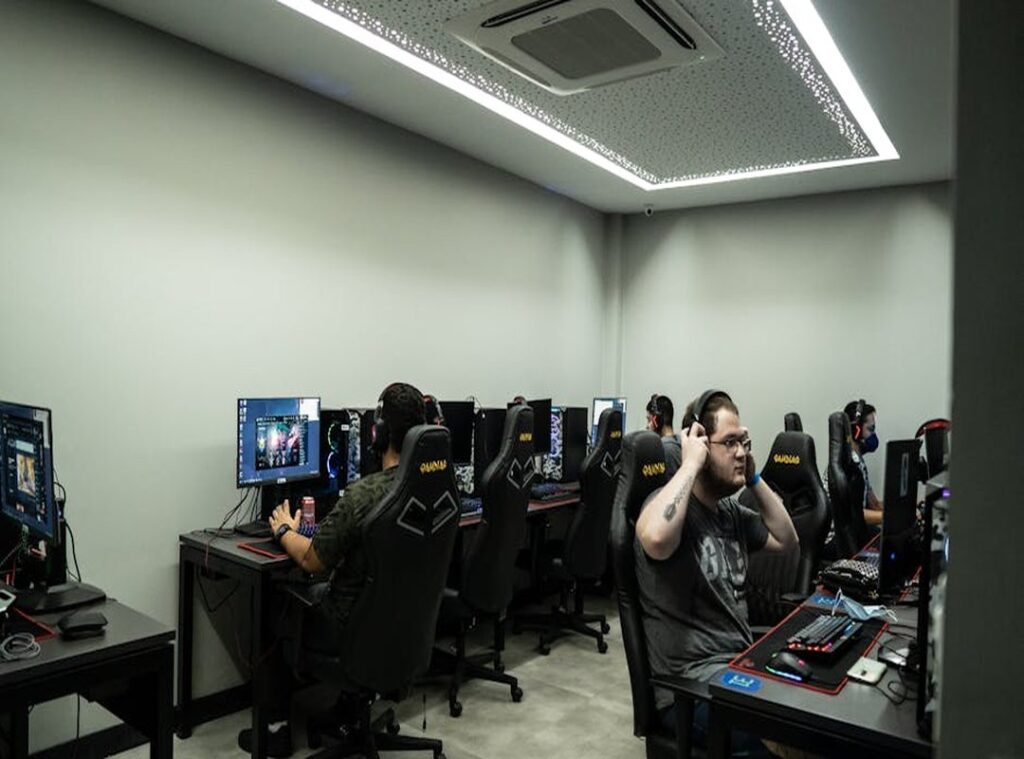
You think esports is still just kids in basements playing video games.
It’s not.
I stood in that Seoul arena. Felt the floor shake. Watched 50,000 people scream for a team that hadn’t existed five years ago.
That same night, a Twitch stream hit 2 million live viewers. More than the NBA Finals.
And a high school in Texas just gave out $200,000 in esports scholarships. Not coding camp. Not robotics. Esports.
People still call it a niche hobby.
They’re wrong.
I’ve spent years at grassroots tournaments. Talking to 16-year-old pros, burned-out coaches, principals defending scholarship programs, and brand strategists betting millions on Twitch ads.
Not just reading press releases. Showing up. Listening.
The problem isn’t that esports is growing. It’s that most people don’t see how deep it goes.
How it reshapes education. Jobs. Identity.
The way we form community.
Why Esports Are Important Hcdesports isn’t about hype. It’s about what’s already happening (in) classrooms, boardrooms, living rooms.
This article tells you how and why. No fluff. No jargon.
Just what’s real.
From Basement LANs to Staples Center: How Esports Stopped Being
I watched the 2013 League of Legends World Championship finals at Staples Center on a grainy stream. My laptop fan screamed. I was alone in my apartment.
But 32 million people tuned in globally. That wasn’t niche anymore. That was real.
The 2018 Olympic discussion? A PR stunt. But it worked.
It forced mainstream outlets to stop saying “video games” and start saying “esports.” (Even if the IOC backpedaled six months later.)
Then came the 2022 Asian Games. Medals. Official standings.
National teams marching in opening ceremonies. You couldn’t shrug that off as “just kids clicking mice.”
TV ratings tell the truth: LCS Finals 2023 pulled 1.2 million concurrent viewers on Twitch. NHL Game 7 that same year? 8.1 million on broadcast TV (but) only 412,000 on streaming. The gap is narrowing fast.
And it’s live engagement, not passive watching.
NCAA launched esports pilots in 2019. Harvard added varsity Overwatch in 2021. UNESCO folded competitive gaming into its digital literacy system.
Not as a footnote, but as core infrastructure.
A media scholar I respect told me flat out: “Esports are the first native cultural institution built entirely by Gen Z (and) it’s already more coherent than most legacy sports leagues.”
That’s why Hcdesports matters. Not as a buzzword. As a lens.
Why Esports Are Important Hcdesports isn’t about proving gamers are athletes. It’s about recognizing where attention, talent, and money actually live now.
You already know this. You’ve seen your cousin get a scholarship for Valorant. Or your coworker watch Worlds instead of the Super Bowl.
It’s not coming. It’s here.
Esports Aren’t Just Games (They’re) Glue
I watch people build identity in real time. Not through jerseys or hometown pride (but) through shared replays, translated VODs, and inside jokes that spread across Discord servers before they hit Twitter.
Traditional sports fandom is top-down. Esports fandom is sideways. You don’t wait for the league to tell you what’s cool.
You co-create it. With memes, multilingual subs, clip compilations, and fan-run wikis.
Twitch isn’t just streaming. It’s where a 19-year-old in Manila teaches beginner macros to a 14-year-old in Detroit (while) both talk through anxiety attacks between matches. (Yes, really.)
YouTube Gaming hosts coding workshops disguised as “how to mod your Overwatch skin.” Kick hosts career panels run by ex-pros who now hire interns from their own chat.
I met a teen (let’s) call them Alex (who) barely spoke in high school classes. But in their college Overwatch club? They coordinated scrims, edited highlight reels, and moderated the Discord.
That club gave them confidence, not just content.
No tryouts. No physical gatekeeping. Just showing up, learning, and being seen.
I covered this topic over in Online Gaming Guide Hcdesports.
Alex now interns at a dev studio. Their first portfolio piece? A custom HUD overlay they built for their team.
That’s why I say: Why Esports Are Important Hcdesports isn’t about hype. It’s about infrastructure. The kind that holds people when schools, workplaces, or even families won’t.
Most platforms bake in accessibility tools. Captions. Color-blind modes.
Keyboard-only navigation. Nobody had to beg for them.
Leadership here isn’t handed down. It grows. Messy, loud, and often led by neurodivergent kids, queer teens, or ESL speakers who finally found a language that fits.
Jobs That Pay: Not Just Pro Players
You think esports is only about winning tournaments?
Think again.
I’ve talked to broadcast engineers making $72k a year. Data analysts pulling $85k at ESL. Mental performance coaches hired by Red Bull (yes,) that Red Bull.
To prep teams for global qualifiers.
Tournament logistics managers? $68k median. Localization specialists? $76k. All with 12 (18%) projected growth through 2030 (BLS + Esports Space Report 2024).
That’s not hype. That’s payroll.
So what’s the path in?
Two real options stand out.
Community college: 18-month esports operations certificate. You learn production, scheduling, compliance, and vendor coordination. Done in under two years.
Cost: under $10k.
University route: game design + behavioral science dual degree. You study player psychology and engine architecture. It’s intense.
It’s also where Riot Games pulls half their new ops leads.
Why Esports Are Important Hcdesports isn’t about glorifying play. It’s about recognizing strategic foresight, rapid pattern recognition, cross-cultural coordination (all) forged in ranked lobbies and live finals.
These aren’t soft skills. They’re job-ready.
The Online Gaming Guide Hcdesports breaks down how to build them without debt or delusion.
State Farm hired a former League of Legends coach last year. For their digital engagement team. No coding required.
You still think it’s just games? Then tell me. What crisis management class teaches live decision-making under 100k viewers?
None.
Esports does.
Beyond the Screen: Esports Isn’t Just Games Anymore
Esports aesthetics are everywhere now. Arcane didn’t just look cool (it) won Emmys. Marshmello didn’t just drop a track (he) filled Fortnite’s sky with 10 million people watching live.
Samsung didn’t run an ad. They built AR League of Legends billboards that reacted to your phone.
That’s not marketing fluff. That’s cultural bleed.
DreamHack runs voter registration booths next to CS2 tournaments. AnyKey isn’t a PR stunt. It’s players shutting down hate speech in real time.
And yes, climate messages do land when they’re stitched into Worlds broadcast breaks.
I watched a teen explain carbon offsets to her Discord server after seeing it flash during a Grand Finals intermission. She’d never opened a news app.
A peer-reviewed MIT study (2023) found teens who played esports regularly scored higher on digital civic literacy tests. Things like spotting misinformation, evaluating source credibility, and organizing online action.
That matters more than most adults admit.
One indie dev told me she built a game about housing justice after volunteering at a women-in-esports mentorship camp. No grant. No pitch deck.
Just anger and access.
Why Esports Are Important Hcdesports isn’t just about wins or viewership. It’s about where attention goes (and) what sticks.
You’ll find deeper context in the Hcdesports Gaming Guide by Harmonicode.
Step Into the Culture (Not) as a Spectator, but as a Participant
I used to think esports was just kids playing games. Then I watched a high school team negotiate sponsor contracts. Then I saw a teacher redesign her curriculum around teamwork metrics from League of Legends.
That’s when it hit me: Why Esports Are Important Hcdesports isn’t about screens or headsets. It’s about how people learn. How they build identity.
How money moves. How brands talk. And who listens.
You dismissed it once. So did I. But ignoring it doesn’t make it go away.
It just leaves you out of the room where culture is being rewritten.
Pick one thing this week. Attend a local amateur tournament. Enroll in a free esports literacy course.
Interview a student on their team. Analyze how your favorite brand uses esports language.
Culture isn’t watched. It’s built.
And esports is one of the most active construction sites we have.
 There is a specific skill involved in explaining something clearly — one that is completely separate from actually knowing the subject. John Colemanastiv has both. They has spent years working with core gaming mechanics and strategies in a hands-on capacity, and an equal amount of time figuring out how to translate that experience into writing that people with different backgrounds can actually absorb and use.
John tends to approach complex subjects — Core Gaming Mechanics and Strategies, Bio-Engineered Game Creatures, Hot Topics in Gaming being good examples — by starting with what the reader already knows, then building outward from there rather than dropping them in the deep end. It sounds like a small thing. In practice it makes a significant difference in whether someone finishes the article or abandons it halfway through. They is also good at knowing when to stop — a surprisingly underrated skill. Some writers bury useful information under so many caveats and qualifications that the point disappears. John knows where the point is and gets there without too many detours.
The practical effect of all this is that people who read John's work tend to come away actually capable of doing something with it. Not just vaguely informed — actually capable. For a writer working in core gaming mechanics and strategies, that is probably the best possible outcome, and it's the standard John holds they's own work to.
There is a specific skill involved in explaining something clearly — one that is completely separate from actually knowing the subject. John Colemanastiv has both. They has spent years working with core gaming mechanics and strategies in a hands-on capacity, and an equal amount of time figuring out how to translate that experience into writing that people with different backgrounds can actually absorb and use.
John tends to approach complex subjects — Core Gaming Mechanics and Strategies, Bio-Engineered Game Creatures, Hot Topics in Gaming being good examples — by starting with what the reader already knows, then building outward from there rather than dropping them in the deep end. It sounds like a small thing. In practice it makes a significant difference in whether someone finishes the article or abandons it halfway through. They is also good at knowing when to stop — a surprisingly underrated skill. Some writers bury useful information under so many caveats and qualifications that the point disappears. John knows where the point is and gets there without too many detours.
The practical effect of all this is that people who read John's work tend to come away actually capable of doing something with it. Not just vaguely informed — actually capable. For a writer working in core gaming mechanics and strategies, that is probably the best possible outcome, and it's the standard John holds they's own work to.