
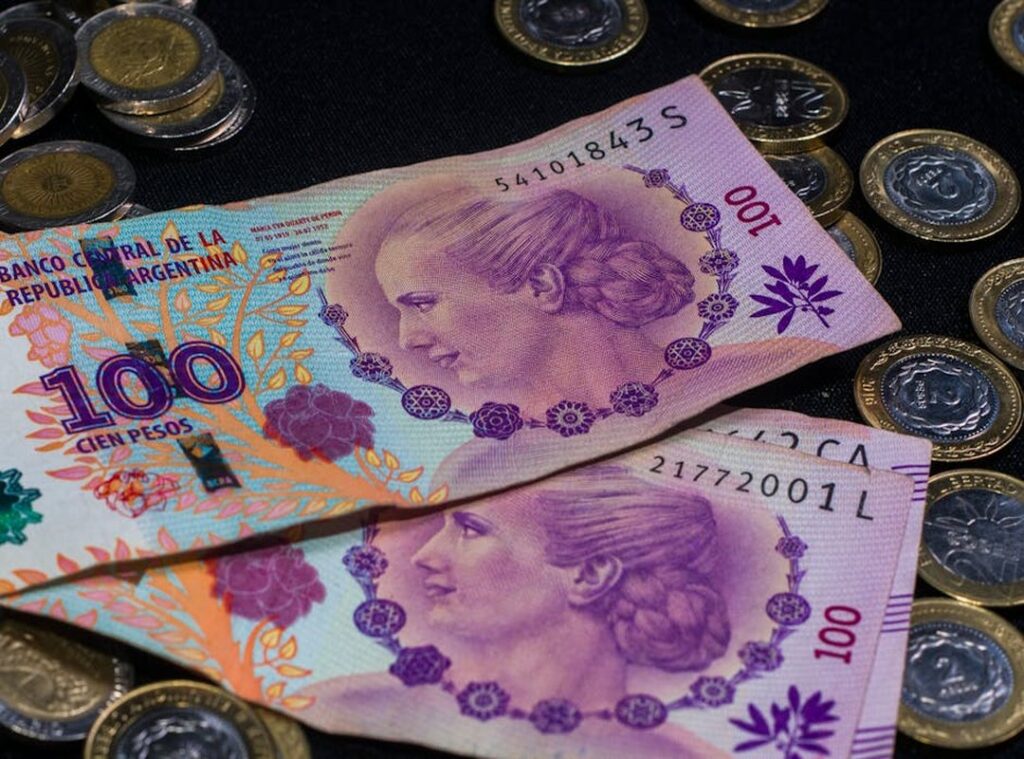
Converting 800 reales a pesos chilenos can be a bit tricky if you don’t know where to start. You might be wondering, how do I get the current exchange rate?
I’ll tell you, it’s not as hard as it seems. First, let’s find out the latest exchange rate.
You can trust me on this. I’ve done this before and I know what works.
This article will walk you through the process step-by-step. So, let’s dive in.
Understanding the Exchange Rate
What is an exchange rate? It’s the value of one country’s currency in terms of another. This is super important for international transactions, whether you’re a business or a traveler.
Current Exchange Rate
The most recent exchange rate between BRL (Brazilian Real) and CLP (Chilean Peso) can vary, so it’s always good to check the latest figures. For example, 800 reales a pesos chilenos would give you a specific amount in CLP.
Factors Affecting Exchange Rates
Several economic factors influence the BRL to CLP rate. Inflation rates, interest rates, and political stability are big ones. If Brazil’s inflation is higher than Chile’s, the BRL might weaken against the CLP.
Economic growth also plays a role. Stronger economies tend to have stronger currencies. So, if Brazil’s economy is booming, the BRL could strengthen.
Lastly, trade balances matter. If Brazil exports more to Chile than it imports, the BRL might appreciate. These factors all work together to set the exchange rate.
Converting 800 Reales to Chilean Pesos
Converting 800 BRL to CLP is straightforward if you follow a few simple steps. First, you need to find the current exchange rate.
You can get this from a reliable financial news site or a trusted currency converter. Once you have the rate, multiply 800 by that number.
For example, if the current exchange rate is 1 BRL = 150 CLP (this is just an example; check the real rate), then 800 reales a pesos chilenos would be 800 * 150 = 120,000 CLP.
To make sure you get the most accurate and up-to-date information, use online tools and apps.
- XE Currency Converter: Known for its accuracy and ease of use.
- OANDA Currency Converter: Another solid choice with real-time rates.
- Currency Converter Plus: A handy app for quick conversions on your phone.
These tools will save you time and ensure your calculations are correct.
Remember, always double-check the exchange rate before making any financial decisions. It’s better to be safe than sorry.
Practical Tips for Currency Conversion
When it comes to converting currencies, especially large amounts like 800 BRL, you want to make sure you’re not losing a chunk of your money to fees.
First, let’s talk about minimizing those pesky fees.
One of the best ways is to use a service that offers low or no conversion fees. Banks can be notorious for high fees, so look into online transfer services. They often have better rates and lower fees.
Now, when and where to convert?
Timing is everything. Try to avoid converting during peak travel seasons. Rates tend to be less favorable then.
Mid-week, mid-month is usually a good time.
For the best rates, check out currency exchange platforms. They often have real-time rates and can give you a better deal than your local bank.
Common pitfalls to avoid:
One big mistake is not comparing rates. Always check multiple sources. Another is waiting too long.
Rates can change quickly, so if you see a good rate, jump on it.
Also, be wary of hidden fees. Some services might advertise low rates but hit you with other charges. Read the fine print.
Converting 800 reales a pesos chilenos?
Make sure you’re using a reliable service. And if you’re dealing with strategy games, remember, managing resources effectively can save you a lot of hassle. (Think about how to manage in-game resources for a moment.)
Stay informed, and you’ll make the most of your conversions.
Using the Converted Amount in Chile

When you convert 800 BRL to CLP, you get a decent amount of Chilean Pesos. Let’s break down what that can buy.
- Meals: You can enjoy a nice meal at a mid-range restaurant for about 15,000-20,000 CLP. That means with 800 reales a pesos chilenos, you could have a few good meals.
- Transportation: A one-way ticket on public transport costs around 700-1,000 CLP. So, your converted amount can cover a lot of rides.
- Entertainment: A movie ticket is about 6,000-8,000 CLP. You could catch a couple of films or even a concert if you find a good deal.
Now, let’s talk about using Chilean Pesos.
Always carry some cash. Many smaller businesses and street vendors prefer cash.
Tipping is appreciated but not mandatory. In restaurants, 10% is a standard tip.
Be mindful of local customs. Chileans are generally friendly and welcoming, so a little respect goes a long way.
Lastly, keep an eye on exchange rates. They can fluctuate, so it’s smart to check before you travel.
With these tips, you’ll be well-equipped to make the most of your 800 BRL in Chile.
Frequently Asked Questions (FAQs)
Q1: How often do exchange rates change?
They can change multiple times a day. It depends on the market and global events. Sometimes, it’s stable for a while, but other times, it’s like a rollercoaster.
Q2: Can I convert BRL to CLP at any bank or financial institution?
Not all banks and financial institutions offer this service. Some might, but others won’t. It’s always best to check with your specific bank first.
Saves you a lot of hassle.
Q3: Are there any restrictions on converting large amounts of money?
Yes, there are. Banks and financial institutions have limits and regulations. Converting 800 reales a pesos chilenos is usually no problem.
But for larger amounts, they’ll ask for more documentation. It’s their way of keeping things legit.
Mastering Currency Conversion
Converting 800 reales a pesos chilenos requires attention to detail. Use the most current exchange rate for accuracy. Follow the steps: find the rate, multiply 800 BRL by this rate, and get the CLP amount.
Staying updated on exchange rates ensures a smooth and cost-effective conversion.
 There is a specific skill involved in explaining something clearly — one that is completely separate from actually knowing the subject. John Colemanastiv has both. They has spent years working with core gaming mechanics and strategies in a hands-on capacity, and an equal amount of time figuring out how to translate that experience into writing that people with different backgrounds can actually absorb and use.
John tends to approach complex subjects — Core Gaming Mechanics and Strategies, Bio-Engineered Game Creatures, Hot Topics in Gaming being good examples — by starting with what the reader already knows, then building outward from there rather than dropping them in the deep end. It sounds like a small thing. In practice it makes a significant difference in whether someone finishes the article or abandons it halfway through. They is also good at knowing when to stop — a surprisingly underrated skill. Some writers bury useful information under so many caveats and qualifications that the point disappears. John knows where the point is and gets there without too many detours.
The practical effect of all this is that people who read John's work tend to come away actually capable of doing something with it. Not just vaguely informed — actually capable. For a writer working in core gaming mechanics and strategies, that is probably the best possible outcome, and it's the standard John holds they's own work to.
There is a specific skill involved in explaining something clearly — one that is completely separate from actually knowing the subject. John Colemanastiv has both. They has spent years working with core gaming mechanics and strategies in a hands-on capacity, and an equal amount of time figuring out how to translate that experience into writing that people with different backgrounds can actually absorb and use.
John tends to approach complex subjects — Core Gaming Mechanics and Strategies, Bio-Engineered Game Creatures, Hot Topics in Gaming being good examples — by starting with what the reader already knows, then building outward from there rather than dropping them in the deep end. It sounds like a small thing. In practice it makes a significant difference in whether someone finishes the article or abandons it halfway through. They is also good at knowing when to stop — a surprisingly underrated skill. Some writers bury useful information under so many caveats and qualifications that the point disappears. John knows where the point is and gets there without too many detours.
The practical effect of all this is that people who read John's work tend to come away actually capable of doing something with it. Not just vaguely informed — actually capable. For a writer working in core gaming mechanics and strategies, that is probably the best possible outcome, and it's the standard John holds they's own work to.